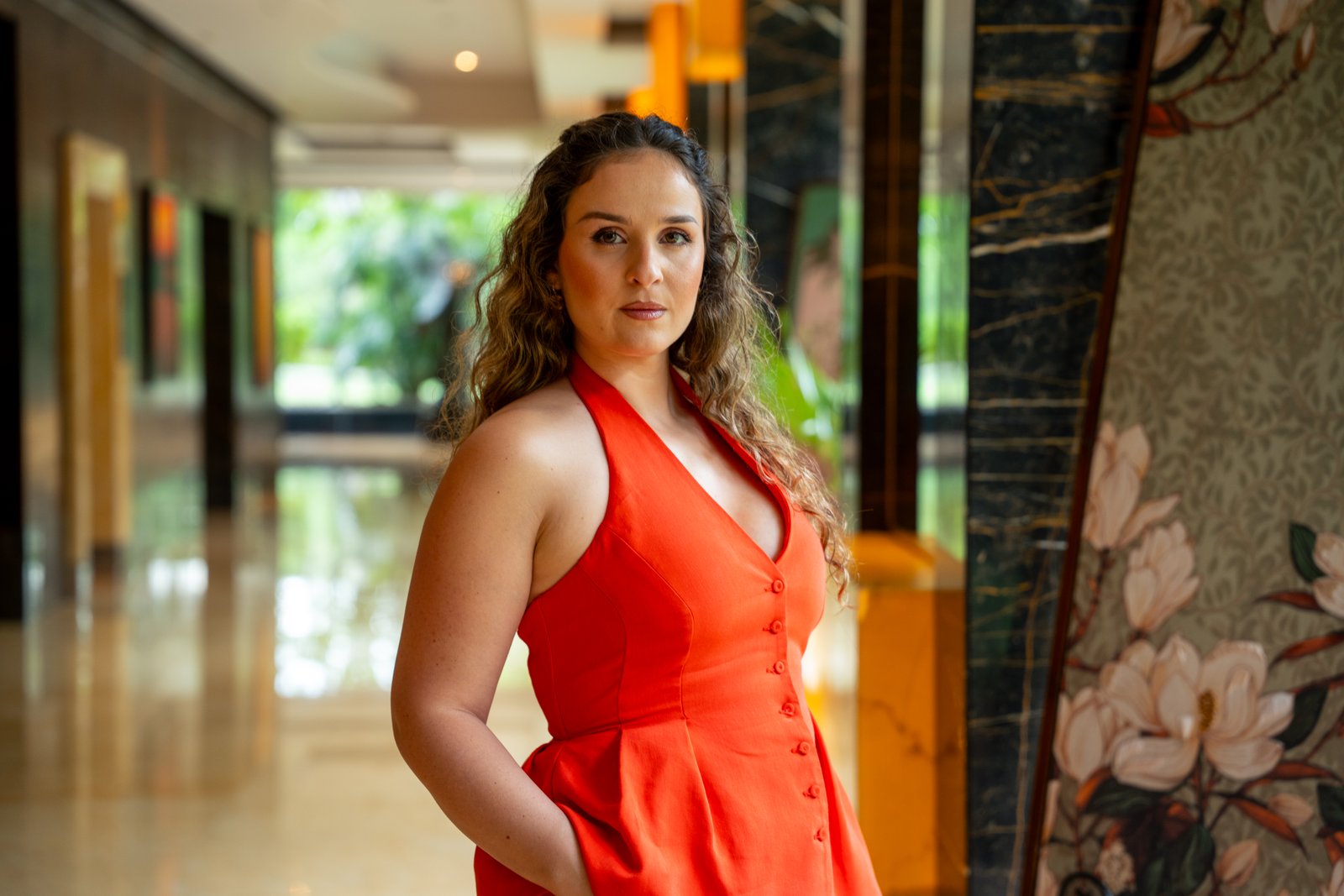
Ebru — Real Estate Broker, Vera Luxe Real Estate
Home Is Everywhere
Ebru is a real estate broker at Vera Luxe with a practice spanning Munich, North Cyprus, Morocco, Spain and the UAE. Her client base is as international as her perspective — expats navigating their first German purchase, investors building cross-border portfolios, and a new wave of buyers at the intersection of crypto wealth and real estate. We spoke with her about what she sees on the ground across these markets, and what most people still get wrong.
@ebrusayan.realestatebrokerThe biggest misconception is that the German property market works the way property markets work back home. It doesn't. Germany has historically been a nation of renters — less than half the population owns their home, which is the lowest ownership rate in the EU. That has shaped everything: the legal framework, the financing system, the role of the notary, the way agents work. Expats from the UK, the US, or the Gulf often arrive expecting a process similar to what they know. They're surprised by how different it actually is.
The second issue is SCHUFA — Germany's credit scoring system. If you've only been in the country for a year or two, you may have limited credit history, which directly affects your financing options. That's not a dead end, but it requires planning. I always recommend that expats start thinking about their financial profile in Germany at least a year before they intend to buy.
"Expats bring something most local buyers don't: they've seen other markets. They understand that owning property is a choice, not a default — and that makes them more intentional buyers."
— EbruSeveral things converging at the same time. After the correction of 2022 to 2024, Munich is sitting roughly 15% below its peak in most districts. Financing has become meaningfully cheaper — rates have come down significantly from their highs. And the structural argument for Munich has not changed: sub-1% vacancy, the highest income levels in Germany, a research and technology ecosystem that keeps drawing talent from around the world, and a building pipeline that simply cannot keep pace with demand.
For an expat who is being relocated to Munich — particularly someone from a market where property ownership is culturally central, like Turkey, the Gulf states, or parts of East Asia — the emotional case is also very strong. You're paying rent anyway. Munich rents are high and rising. If you have the financial foundation to buy, the question becomes: why would you not?
Let's talk about international investing — building a portfolio across multiple markets. How do you approach that conversation with clients?The first thing I try to do is understand what the property is actually for. Is it lifestyle — somewhere you want to spend time, that doubles as an asset? Is it pure yield — rental income, ideally in a market with a lower entry price than Germany? Or is it capital preservation — putting wealth into something tangible in a market with strong long-term fundamentals? Those three objectives lead to very different places.
For lifestyle-plus-asset, Spain and Morocco are compelling right now. For yield, North Cyprus remains one of the most interesting markets in the Mediterranean — entry prices are a fraction of comparable coastal European properties, and the rental market is being driven by a rapidly growing international student and digital nomad population. For pure capital preservation, Germany is hard to argue against: transparent legal system, stable currency, deep market.
The clients who build real wealth through property are the ones who think in portfolios, not single transactions. A Munich apartment, a North Cyprus coastal property, a Marrakech riad — those three assets together serve completely different purposes and completely different moments in the economic cycle.
"The most sophisticated investors I work with don't ask 'what should I buy?' They ask 'what role should this asset play?' Once you think that way, it completely reframes the search."
— EbruNorth Cyprus is genuinely exceptional right now as an investment opportunity, and I say that having looked at a lot of markets. The combination of factors is rare: Mediterranean coastal location, a young and rapidly developing infrastructure, a legal system that is accessible to international buyers, entry prices that are still dramatically below comparable properties in Cyprus, Malta, Greece or Spain — and a development pipeline that is growing fast but hasn't caught up with demand yet. The window for the best pricing won't stay open indefinitely.
The crypto element is specific to a particular type of buyer — typically someone who has built significant wealth in digital assets and wants to convert a portion of it into tangible property. North Cyprus is one of the very few markets where this is genuinely straightforward. Several developers actively accept cryptocurrency as payment, either in full or as a deposit. The transaction is handled at the developer level, which means buyers don't need to navigate complex conversion processes through local banking systems.
What I find interesting about this buyer profile is how thoughtful they often are about the underlying asset. They've made money from an asset class that most of the world still doesn't fully understand. They want something they can stand in front of. Something with a view. Something that will hold value regardless of what any particular blockchain does in the next ten years. North Cyprus gives them that — at a price that still feels rational relative to what's coming.
What do you wish more people understood about what you actually do?That the best version of this job is a long-term advisory relationship, not a transaction. I have clients I work closely with — people whose financial lives I understand well enough to tell them, genuinely, whether this is the right moment to buy or not. Sometimes the honest answer is: wait six months, build your equity, strengthen your financing position. That's not a popular thing to say in a commission-based business. But it's what builds the kind of trust that means those clients come back, and they send everyone they know.
I'm also very deliberate about the international dimension of what we do. Munich is our home market and it always will be. But the clients I work with are global people — they live internationally, they think internationally, they want someone who understands that and can move with them. Building the network across North Cyprus, Morocco, Spain and the UAE wasn't an expansion strategy. It was a response to who my clients actually are.
Ebru is a real estate broker at Vera Luxe Real Estate, with a practice covering Munich, North Cyprus, Morocco, Spain and the UAE. She works primarily with international buyers, expats and investors building cross-border property portfolios.
Start a Conversation
Whether you're buying your first home in Munich or building an international portfolio, we work with the full picture — not just the next transaction.
Get in Touch